
While we spend a lot of time on this site talking about cinematography and the all-encompassing art of filmmaking itself, we admittedly don’t spend nearly enough time on audio and sound design as it deserves. This is an industry-wide trend that reflects a bias we likely all have against this important, but less noticeable, part of film production.
For better or worse, when sound design is done well, it can hardly be noticed. In fact, some of the most technically marvelous sound design feats in filmmaking history are ones you might not even know of yourself.
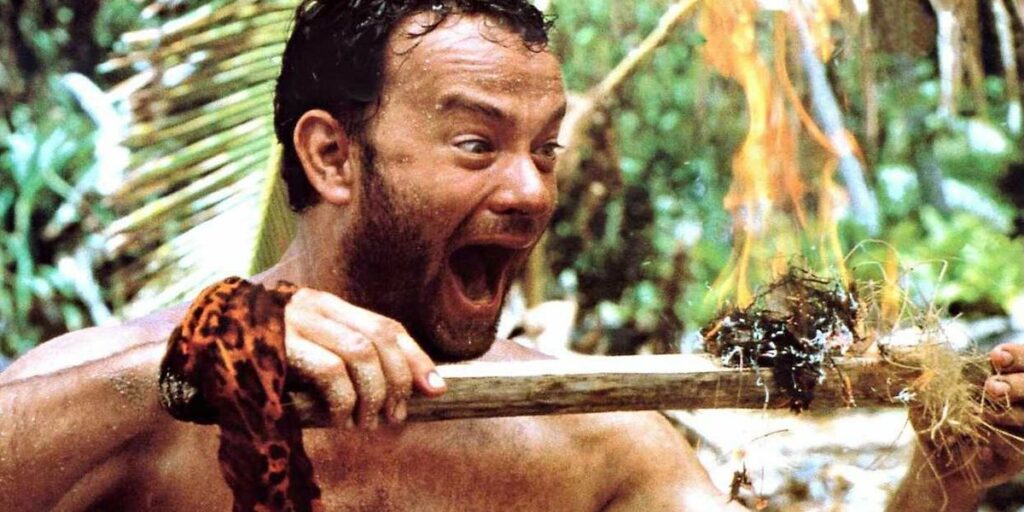
No film better exemplifies this conundrum than Cast Awaywhich, as you can see in this video essay below, is one of the most impressive sound design feats ever—and one you likely had no idea about.
The Sound Design of Cast Away
So, this is really just a very cool look into the “genius illusion” behind the sound of Cast Away, as the YouTube channel The Back Focus puts it in the title of the video. The main argument of the essay is simply that the film Cast Away is one of the film’s greatest hidden achievements.
This is because every sound that our lead actor (Tom Hanks) makes on the island in the film, including his sparse dialogue, was created from scratch. As in, it wasn’t recorded on set or on location like you’d think it would have been using traditional audio recording techniques.
In the video, the host breaks down how Oscar-winning sound designer Robert Thom rebuilt the entire island through Foley, ADR, Worldizing, wind design, wave recording, and environmental soundscapes to create one of the most invisible feats of sound design in modern cinema.
On Location Audio is Hard
While the technical feats of how they recreated all of the audio and sound for the film after the fact is part of the story to explore, the first part is quite interesting as well and highlights a key problem many filmmakers face.
As you might expect, if you stop to think about it, it’s incredibly hard to record usable audio when shooting in chaotic and loud locations like beaches and tropical islands. As the YouTube channel puts it: “Between crashing waves and constant wind, director Robert Zemeckis made the bold decision to rebuild the film’s entire sonic world. That meant every grunt, breath, footstep, creak, wave, and shout (“Wilson!”) had to be designed in post.”
The video essay really finds its footing when it explores how Thom and his Foley team were then able to source many unconventional materials (like wicker baskets, creaking floors, and twisting wood) to simulate palm trees, wind resonance, and environmental tension.
The ADR Illusion
At the heart of the sound and audio design magic trick, so to speak, is the use of ADR, which was used to seamlessly re-record Tom Hanks’ dialogue using Walter Murch’s “Worldizing” technique. This illusion was done by having Hanks record clean lines in a studio, then the team blasted them outdoors at Skywalker Ranch to capture realistic distance, echo, and acoustics that matched the empty island.
The film is also notable for its lack of a score, a decision that actually makes the absence of sound become part of the emotional backbone of the story, too, which is quite interesting. Overall, this video essay is super fun and a great watch for those looking to give some extra focus to this often-ignored aspect of the filmmaking journey.
Here are some helpful timestamps to further check out different parts of the video essay:
Source link